
The DVSA will officially increase the mandatory size and lift capacity of authorised jacking beams used in Class 4 MOT Testing Stations from 1 April 2026.
Designed to handle the surging weight and width of modern electric and hybrid vehicles, the new rules outlined in Special Notice 04-25 expose a growing safety dilemma for independent workshops.
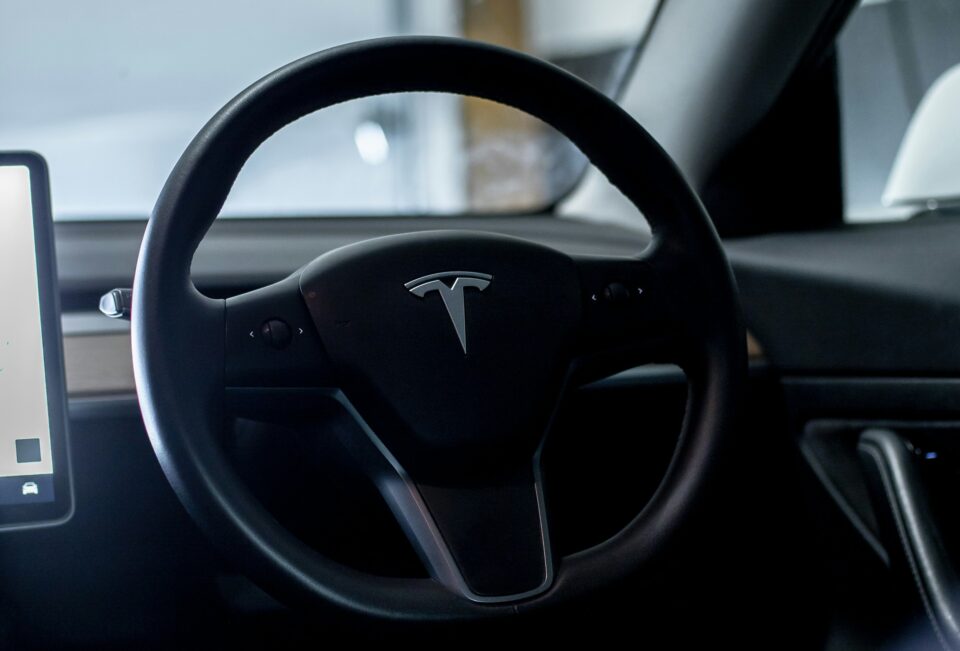
The DVSA has now issued a direct warning regarding the dangers of lifting wide-bodied EVs on older equipment, specifically naming the Tesla Model S and X.
To safely support the increased weight and wider chassis of modern vehicles, the DVSA is updating its jacking equipment standards.
New equipment standards (effective 1 April 2026)
Higher capacity: Equipment must have a minimum safe working load (SWL) of 2 tonnes (up from 1.5 tonnes).
Wider dimensions: Lifting pads must have a minimum distance of 1,700mm between centres.
Related: Garage Matters readers call for radical MOT reforms
Initially, it was believed these rules only applied to garages opening a new site or changing ownership. However, the DVSA has now clarified a crucial catch: the rules also apply to “replacements due to worn or broken jacking equipment.”
This means that if your current 1.5-tonne jacking beam breaks after 1 April 2026, you cannot simply buy a like-for-like replacement. You will be forced to upgrade your bay to accommodate the new 2-tonne, wider equipment.
DVSA’s direct “Tesla” warning
The driving force behind this rule change is a safety crisis brewing in the MOT bay.
As recently highlighted in a deep-dive report by MOTester.co.uk, millions of wider, heavier cars are already on the road, and most current MOT bays aren’t equipped to lift them safely.
It is estimated that only around 25% of current test stations have jacking beams suitable for these larger vehicles.
The DVSA has now acknowledged this specific danger. In their latest update, they warned testers: “One of the particular points we have noted when testing different types of vehicles is that width can be a challenge. Vehicle types, such as Tesla models X & S, may not be suitable to test on jacking beams that are not the wider type… You don’t want to inadvertently damage a vehicle.”
If a tester unknowingly uses an inadequate beam on a vehicle like a Tesla, they risk jacking the vehicle on its battery, potentially causing catastrophic damage to high-voltage cables, or worse, risking severe electric shock.
What to do right now
To protect your staff, your business, and your customers’ vehicles, MOTester.co.uk recommends taking the following steps immediately:
– Check your beam span: Physically measure the centre-to-centre distance of your lifting pads to know your absolute maximum width.
– Verify your SWL: Check your current equipment’s safe working load.
– Know when to say no: The DVSA’s guidance is clear: only test a vehicle if it is safe to do so. If your equipment cannot safely reach a vehicle’s approved jacking points, refuse the test.
– Document everything: If you have to decline a test due to equipment limitations, document the decision clearly to protect your station’s compliance record.