

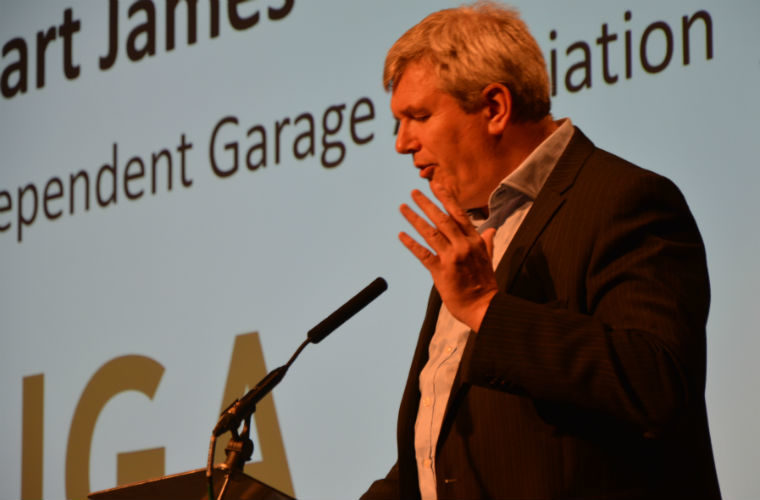

The Independent Garage Association (IGA) has outlined a sharp set of priorities for the government, calling for immediate intervention on the long-standing MOT fee freeze, the mounting operational pressures on small businesses, and the critical need to upskill the workforce for the zero-emission transition.
Ending the 16-year MOT fee freeze
The MOT test remains a cornerstone of the UK’s road safety record, yet the standard test fee for passenger cars has been capped at £54.85 since 2010.
Over the past 16 years workshop overheads have escalated dramatically. The IGA warns that without a meaningful update to the fee cap, workshops will be forced to reallocate resources toward more viable revenue streams.
“Without a significant update to the current MOT fee, we risk garages having to prioritise more profitable work, reducing the number of bays available for MOT testing and therefore reducing national capacity,” the IGA noted.
A restriction in testing capacity directly threatens consumer choice, locality, and overall road safety across the UK.
Easing financial and regulatory burden on SMEs
Independent garages play a crucial role in maintaining local mobility, providing employment, and training apprentices. However, navigating cumulative cost surges and heavy regulatory demands has become increasingly difficult.
Recent spikes in business rates, increases in employer National Insurance contributions, and complex employment compliance requirements are squeezing margins.
The IGA stresses that these compounded expenses severely limit a workshop’s capacity to reinvest in new diagnostic capabilities, upgrade facilities, or expand its workforce.
Automotive skills gap
With over one million 16-to-24-year-olds currently not in education, employment, or training (NEET), the IGA is championing targeted financial incentives for small-to-medium businesses that recruit and train young apprentices.
As discussions around rebuilding the UK’s industrial capacity continue, the association emphasises that manufacturing vehicles is only half the equation, maintaining, repairing, and servicing complex modern powertrains requires a highly trained, dedicated network of technicians.
Policy certainty on zero-emission transition
While public EV discussions often center on charging networks and range anxiety, long-term aftermarket capability is just as essential for sustaining consumer confidence in electric vehicles.
Independent workshops are actively investing in high-voltage tools, safety equipment, and specialised technician training. To protect consumer choice and ensure the UK fleet remains safely maintained throughout its lifecycle, the IGA calls on the government to deliver clear, consistent policy roadmaps for the zero-emission rollout.
1 comment
When discussing the MOT freeze could class 1 & 2 also be included as our costs have also risen