

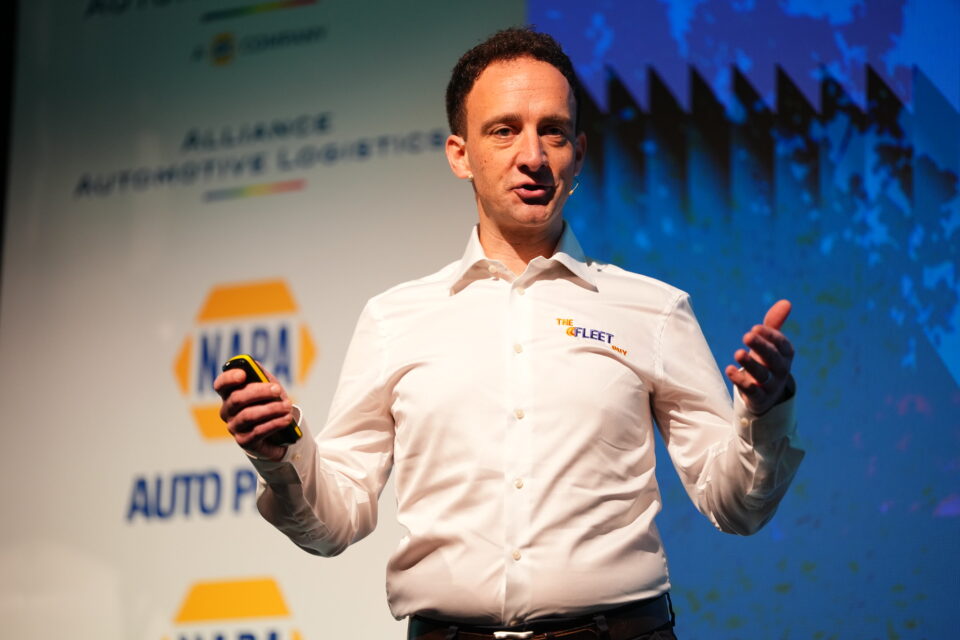
Tim Guidotti, director of Midlands-based Ferdotti Motor Services, founder of The Fleet Guy, and a recognised innovator in fleet work management, delivered a compelling presentation at the Independent Automotive Aftermarket Federation (IAAF) Conference, giving members an insider’s view of the evolving fleet landscape.
Drawing on decades of family business experience, Tim explained how Ferdotti Motor Services has grown into a multi-workshop operation with 30 staff across five sites, with a sixth EV-specialist facility due to open next year.
Today, 90 per cent of the business’s work comes from fleet contracts, providing predictable revenue, high average invoice values, and strong relationships with professional fleet operators.
“Fleet work transformed our business,” Tim said. “High-mileage vehicles require multiple services each year, keeping workshops busy and cashflow healthy. And the relationships are professional and secure, you don’t face the same payment challenges you sometimes see with retail customers.”
Last year, Tim launched The Fleet Guy to help independent garages tap into the growing fleet market by connecting them directly with fleet and leasing companies. The platform provides guidance, support, and best-practice processes for managing contracts efficiently while maintaining the highest standards of service.
Through this approach, independent garages can deliver faster turnarounds, higher-quality repairs, and exceptional customer care. Tim illustrated the impact with a striking example: Ferdotti completed a Peugeot repair in four days, compared with four to eight weeks a dealership estimated, prompting the fleet company to commit another 140 vehicles for servicing.
Tim then outlined the wider market trends driving demand.
Around 61 per cent of all vehicles are now sold into business fleets, and 75 per cent of new battery electric vehicles (BEVs) go straight to fleet operators. Meanwhile, younger drivers are increasingly questioning car ownership, favouring mobility-as-a-service options. Add in the continued wave of dealer closures and consolidation, and the message is clear: independent workshops have a growing opportunity to capture high-value fleet work.
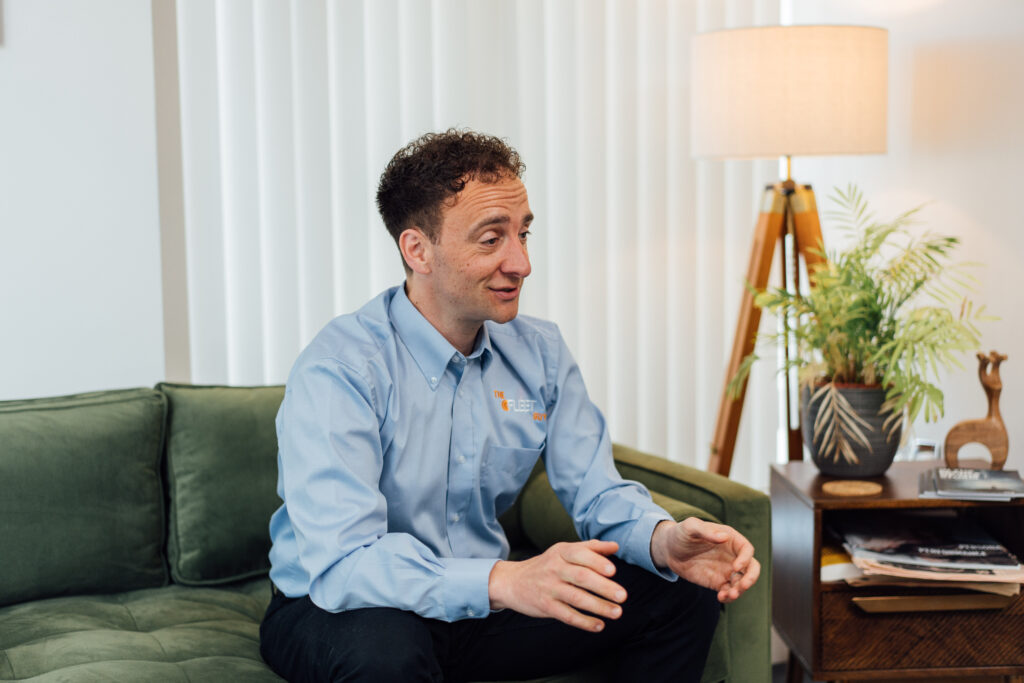
To underline the need for strategic agility, Tim drew lessons from automotive history. At the turn of the 20th century, the U.S. had around 2,000 automobile manufacturers; by 1921 only 88 survived, and by 1940 just three. Many didn’t fail because their cars were poor, but because they couldn’t react to technological, economic, or market shifts.
He compared this to the EV landscape today, where more than 450 manufacturers have launched and folded within a decade, wiping out billions in investment. Only Tesla has successfully scaled. The takeaway, Tim said, is that long-term success depends on reinventing processes and business models, not simply updating products.
“History doesn’t repeat, but it rhymes,” he noted. “Independent garages must constantly evolve their workflows, adopt new technology, and rethink how they deliver service if they want to thrive in the next 10 to 15 years.”
Tim emphasised that investing in data-driven workflows is now essential, helping garages streamline bookings, track vehicle histories, manage parts more intelligently, and deliver faster, more reliable turnaround times. With these systems in place, independents can match the speed, accuracy, and transparency that fleet operators increasingly demand.
“We have to revolutionise how we operate, not just what we do,” he concluded. “Fleets are looking for speed, reliability, and quality, and independents who can deliver on all three will be the winners.”
Independent garages looking to grow their fleet work and connect with leading leasing and fleet companies can find out more at https://www.thefleetguy.co.uk/.