

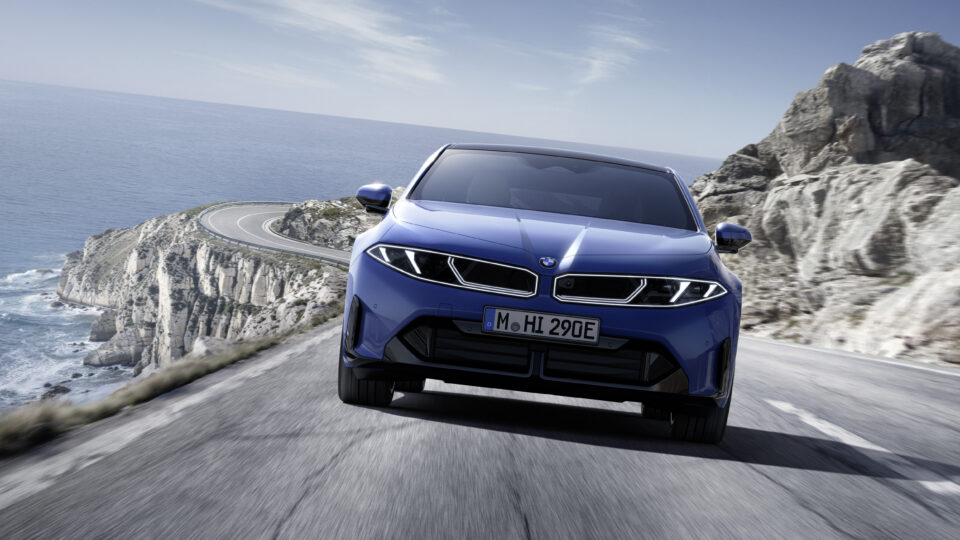
The traditional fuse box is dead, the battery is now the chassis floor, and friction brakes are officially a backup system. Here is what the newly announced BMW i3 means for the independent garage.
While consumers are being sold on the promise of a 900-kilometre range and a futuristic, digital-first interior, the unveiling of the all-electric BMW i3, the second model in the brand’s much-hyped Neue Klasse generation, serves as a stark technical warning for the independent aftermarket.
Arriving in UK showrooms in Autumn 2026, the new i3 represents a fundamental shift in how vehicles are wired, powered, and structurally built.
For independent garages, the technology underpinning this saloon provides a three-year head start to prepare for a new era of diagnostics and servicing.
Death of the physical fuse
Perhaps the most significant change for daily workshop operations is the total overhaul of the vehicle’s electrical architecture.
BMW has implemented a new four-zone cabling system managed by four “superbrain” high-performance computers, which the manufacturer claims offer 20 times more processing power than previous models.
The i3 abandons traditional physical fuses in favour of “Smart eFuses.” This intelligent power protection system allows for shorter, thinner wiring harnesses and digital power distribution.
For technicians, this means electrical diagnostics will become an entirely software-driven process. A blown circuit will no longer present as a physical break; it will be a software trip requiring OEM-level diagnostic access to interrogate, diagnose, and reset.
BMW i3 at a glance
UK Arrival: Autumn 2026
Architecture: 800-volt Gen6 eDrive
Max charging: 400 kW DC (adds 250 miles of range in 10 minutes)
Drivetrain (50 xDrive): Dual motor producing 469 hp and 645 Nm of torque.
Battery: Cylindrical cells (46mm x 95mm)
Beneath the floorpan, BMW’s sixth-generation eDrive technology moves away from the modular prismatic cells seen in current models.
Instead, it uses energy-dense cylindrical cells packed directly into the housing without modular structural elements, a design known as “Cell-to-Pack.”
However, it is the “Pack-to-Open-Body” construction that will fundamentally alter workshop handling.
The i3 chassis features an open floor, which is structurally closed only by the installation of the high-voltage battery.
The battery housing cover effectively becomes the vehicle underbody, directly contributing to the car’s torsional rigidity.
For the aftermarket, this structural integration dictates that routine lifting, suspension geometry, and collision repair will require absolute adherence to strict manufacturer procedures, as the battery is now a stressed, load-bearing member of the chassis.
Brake servicing
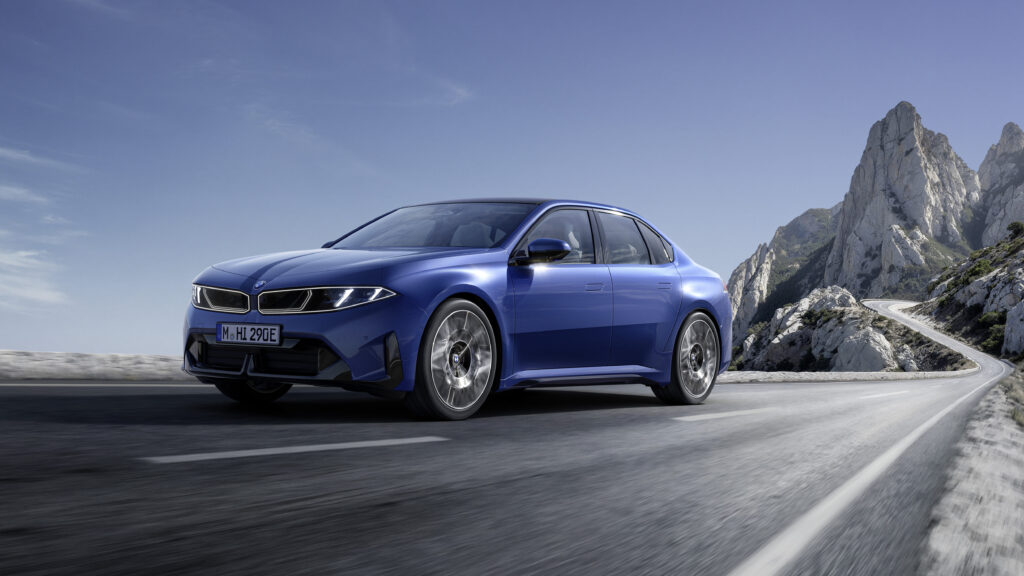
The i3 introduces a feature BMW calls “Soft-Stop,” which relies heavily on the Gen6 electric motors to manage deceleration.
The manufacturer explicitly notes that in everyday driving, the recuperation brake takes over almost all braking operations.
Friction brakes are now relegated to emergency situations and highly spirited driving.
For independent garages, the revenue model for brake servicing will need to pivot. Instead of routine pad and disc replacements due to wear, workshops will face an influx of seized calipers, rusted discs, and sticking sliders caused by chronic under-use.
Selling annual “brake strip, clean, and lubricate” services will become essential preventative maintenance to ensure these emergency friction systems actually work when a driver needs them.
Dual motor complexity
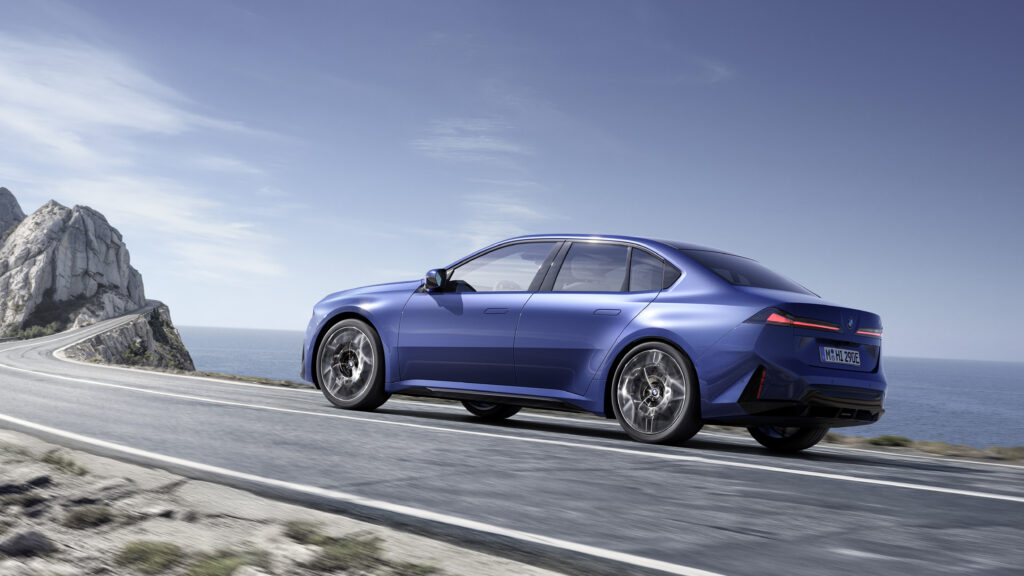
Despite the “fewer moving parts” mantra of electric vehicles, the i3 50 xDrive relies on a highly complex dual-motor setup.
The front axle uses an Asynchronous Motor (ASM), while the primary rear axle is driven by an Electrically Excited Synchronous Motor (EESM).
Unlike permanent magnet motors, the EESM does not rely on rare earth metals, instead generating its magnetic field via electrical excitation.
SERMI implication
With over-the-air (OTA) updates continuously altering vehicle software and an electrical system run by four central supercomputers, the i3 will be heavily locked down. Accessing security-related data, recalibrating advanced driver assistance systems (ADAS), or resetting Smart eFuses could require full, verified SERMI accreditation.
Historically, this design requires a brush and slip-ring assembly to transfer current to the spinning rotor components that eventually wear out.
As these vehicles age and fall out of warranty, replacing these wear items within the motor housing could emerge as a highly specialised, lucrative service opportunity for independent EV specialists.
Ultimately, the launch of the BMW i3 proves that 800-volt architectures, software-defined electrical networks, and structural batteries are rapidly becoming the industry standard.