

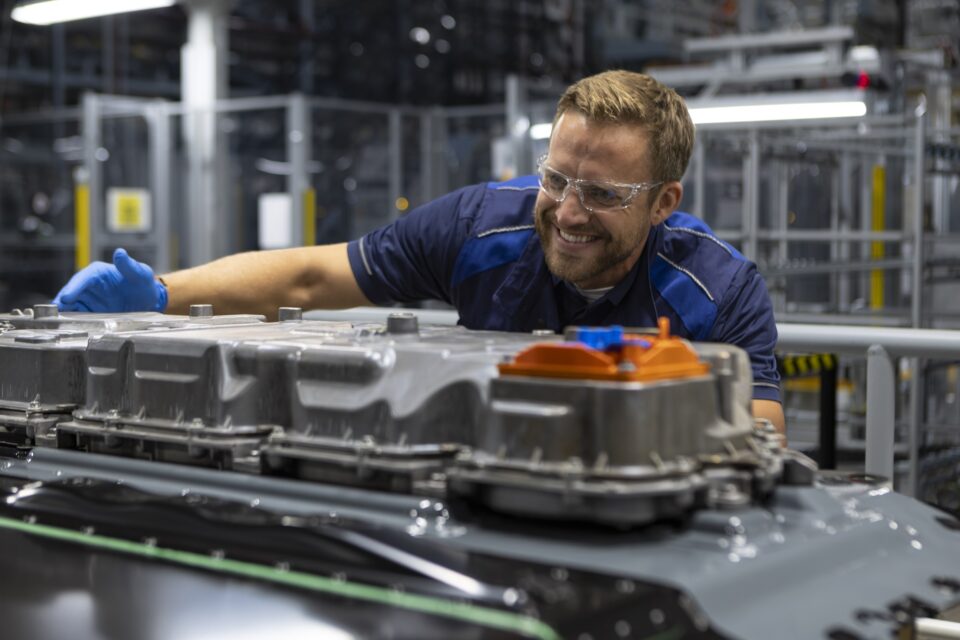
Set to make its series debut in the fully-electric BMW iX5, the German brand’s sixth-generation eDrive platform introduces 800-volt architecture, cylindrical cells, and a direct “cell-to-pack” (CTP) structural design.
Previous generations of BMW high-voltage batteries relied on removable module sub-assemblies inside an outer casing, allowing technicians to isolate and replace single faulty cell groups.
The Gen6 battery bonds 46mm cylindrical cells directly into the pack structure using a specialized mechanical foaming process. The hardened foam acts as insulation, structural support, and environmental sealing simultaneously.
Because internal components are permanently set within the foam matrix, component-level internal cell replacement will no longer be achievable during off-board repair. Workshops encountering internal cell degradation or isolation faults will be required to manage complete pack replacement procedures or specialised diagnostic hand-offs.
Despite the enclosed core battery structure, BMW has relocated the central control unit, designated the Energy Master, to the external top surface of the battery housing.
Top-mounted control units streamline initial diagnostics
Because control board and contactor issues represent a high percentage of non-start high-voltage fault codes, external positioning allows diagnostic access and component replacement without dropping the complete battery assembly from the chassis.
Technicians can access the top-mounted unit from inside the cabin area beneath the rear seat, eliminating heavy lifting risks and avoiding the need to break structural pack seals for basic electronic management faults.
Safety protocols for 141 kWh 800V systems
Operating at 800 volts with a net usable capacity of 141 kWh in European specification, the iX5 system demands absolute adherence to high-voltage isolation standards during underbody, steering, and braking repairs.
– High-voltage isolation and lock-out/tag-out (LOTO) protocols must be completed prior to placing the vehicle on a lift.
– CAT IV 1000V rated testing equipment and insulated hand tools are strictly required to verify zero-energy status.
– PPE requirements including rated high-voltage gloves and face shields must be enforced whenever working near primary high-voltage busbars or the external Energy Master unit.
As 800V architectures and structural batteries move into the broader vehicle fleet, investment in Level 3 and Level 4 High-Voltage training remains critical for workshops planning to maintain modern EV platforms safely and profitably.