

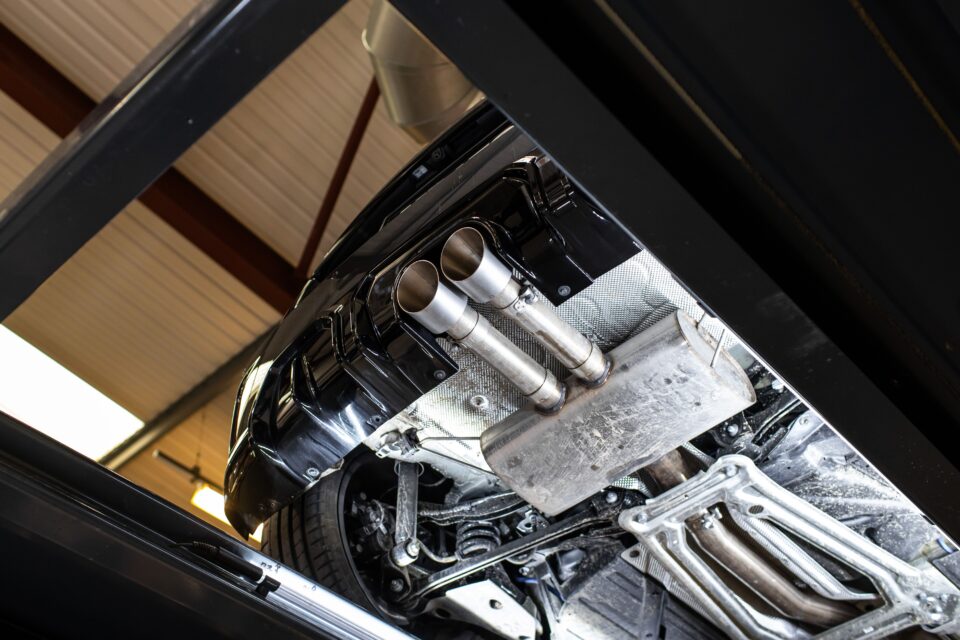
Workshops offering performance modifications are facing intensified regulatory scrutiny as the Driver and Vehicle Standards Authority (DVSA) steps up enforcement against illegal exhaust alterations.
The latest action saw a Berkshire-based specialist ordered to pay a four-figure penalty at Reading Magistrates Court following a joint undercover operation between the DVSA’s Market Surveillance Unit and Thames Valley Police.
The investigation established that the business had removed a vehicle’s catalytic converter and remapped its engine control unit to produce an aggressive pop-and-bang overrun, while failing to inform the undercover customer that the vehicle would no longer comply with road-legal MOT standards.
This latest outcome follows a landmark conviction in Yorkshire, where a tuning specialist was ordered to pay over £7,200 in fines and costs for openly supplying straight-pipe decats and overrun remaps.
In both proceedings, the courts reaffirmed that workshop owners have a clear legal obligation to understand the roadworthiness implications of the services they supply.
The legal backbone behind these enforcement actions sits primarily within Section 75 of the Road Traffic Act 1988, alongside Regulations 61 and 61A of the Road Vehicles Construction and Use Regulations.
Under Section 75, it is a criminal offence to alter a vehicle in such a way that its use on a public highway becomes unlawful, exposing non-compliant businesses to unlimited fines in the magistrates’ courts.
Removing emissions control hardware like catalytic converters or diesel particulate filters directly breaches air quality requirements and triggers an immediate MOT failure, while custom calibrations that exceed standard pass-by drive-by noise limits, currently set at 75 decibels for cars manufactured since 2016, place both the garage and the driver in legal jeopardy.
Chris Dormand, head of the DVSA Market Surveillance Unit, confirmed that the agency will continue using proactive test purchases and intelligence-led investigations to tackle alterations that generate anti-social noise and harmful roadside emissions.
He warned that the authority will actively pursue any aftermarket firm supplying modifications that render road-going vehicles illegal.
Why it Matters
With roadside acoustic enforcement cameras also being deployed by police forces across the country, independent garages carrying out tuning and bespoke fabrication must exercise diligence.
Where genuine track, competition, or off-road modifications are carried out, businesses must ensure robust record-keeping, unambiguous customer disclaimers, and clear internal protocols to prove they are not releasing unroadworthy vehicles onto public roads.