

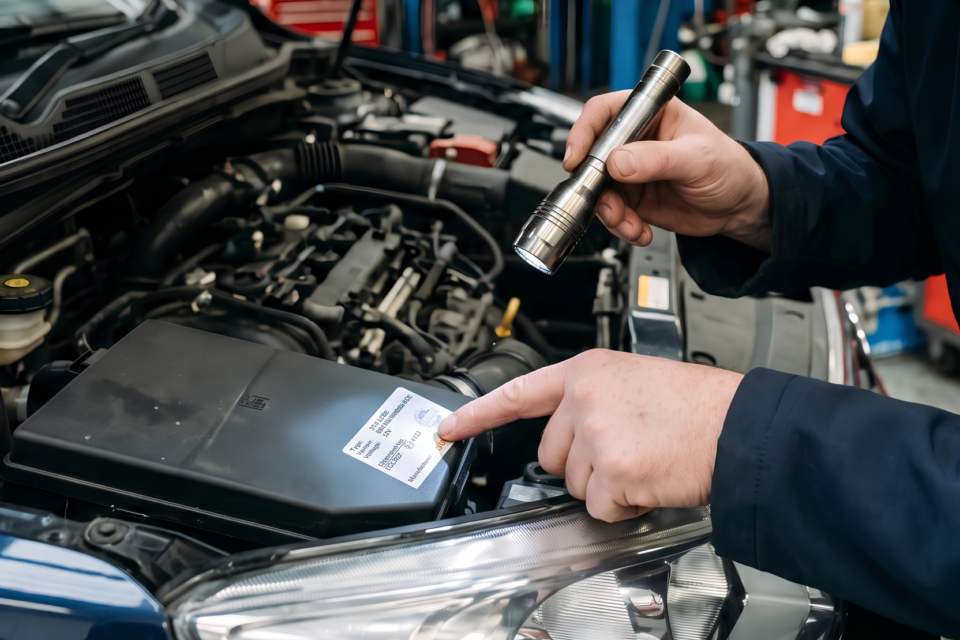
From 14 October 2026, MOT testers across the UK will be permitted to pass retrofitted LED replacement bulbs (LEDr) in halogen headlamps, provided the light source carries full ECE approval and the vehicle displays a valid approval sticker.
The Driver and Vehicle Standards Agency (DVSA) has formally notified testing stations of an imminent update to the MOT testing manual, ending a strict five-year stance that saw aftermarket LED conversions automatically failed under Section 4.14 for “light source and lamp not compatible”.
The revision applies to classes 3 (tricycles), 4 (cars), 5, and 7 (vans).
Under the incoming rules, testing stations will not be expected to remove headlamp units or strip down assemblies to inspect micro-markings on individual bulbs.
Instead, the DVSA is placing the burden of proof squarely on physical certification labels provided by reputable lighting manufacturers.
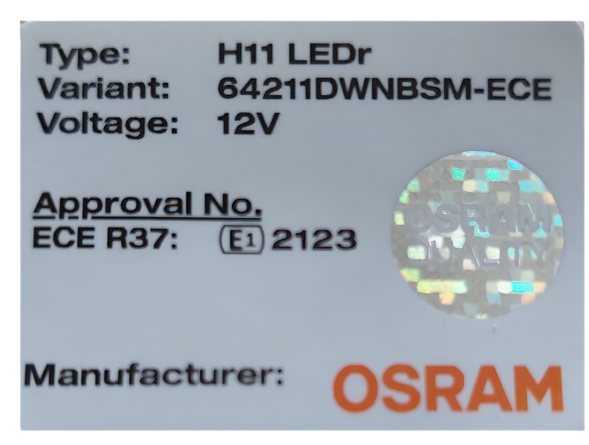
Manufacturers producing road-legal, ECE-approved LED replacement light sources (LEDr) under UN ECE Regulation 37 will now include a secure, tamper-evident approval sticker inside the retail packaging.
The sticker system: How the new check works
For a vehicle fitted with LEDr bulbs to pass the test:
– The sticker must be permanently affixed to the vehicle, typically positioned visibly inside the engine bay.
– The sticker must carry key regulatory references, including the bulb type (e.g. H11 LEDr), variant code, voltage, manufacturer name, and the official ECE R37 approval number (such as an E-mark approval code).
– The sticker must be readily visible to the tester during routine inspection.
If a customer fits certified LED bulbs but discards the packaging without applying the label, the tester must continue to reject the vehicle under Section 4.14
Ending years of testing ambiguity
The change brings the UK testing regime into closer alignment with European type-approval standards.
Across several European markets, major OE lighting suppliers such as Osram and Philips have offered certified retrofit LEDs under UN ECE R37 homologation, verified by model-specific vehicle application lists.
In Great Britain, however, the MOT manual was tightened in early 2021 to issue an automatic refusal of a test certificate for any halogen-to-LED headlamp conversion on vehicles first used on or after 1 April 1986.
The policy was implemented because testers had no practical, non-intrusive way to distinguish between precision-engineered, compliant LED retrofit light sources and cheap, hazardous drop-in kits that scatter glare into oncoming traffic.
By requiring the manufacturer’s vehicle-applied sticker, the DVSA provides testers with an enforceable, visual benchmark on the ramp.
Beam pattern still rules
While this revision resolves the long-standing light source compatibility dilemma, workshops and testers should note that having an approved sticker is only half the job.
The installed headlamp must still satisfy all standard MOT beam image checks.
If an approved LED bulb is seated incorrectly, fitted to a deteriorated reflector, or produces an unacceptable cut-off or kick-up on the beam tester, it remains a failure.
For independent garages handling servicing and pre-MOT preparation, the message to technicians and front-of-house staff is clear: only fit genuine, ECE-approved LEDr kits from established manufacturers, ensure the vehicle model is listed on the manufacturer’s approval schedule, and never let the car leave the workshop without affixing the approval sticker in the engine bay.