

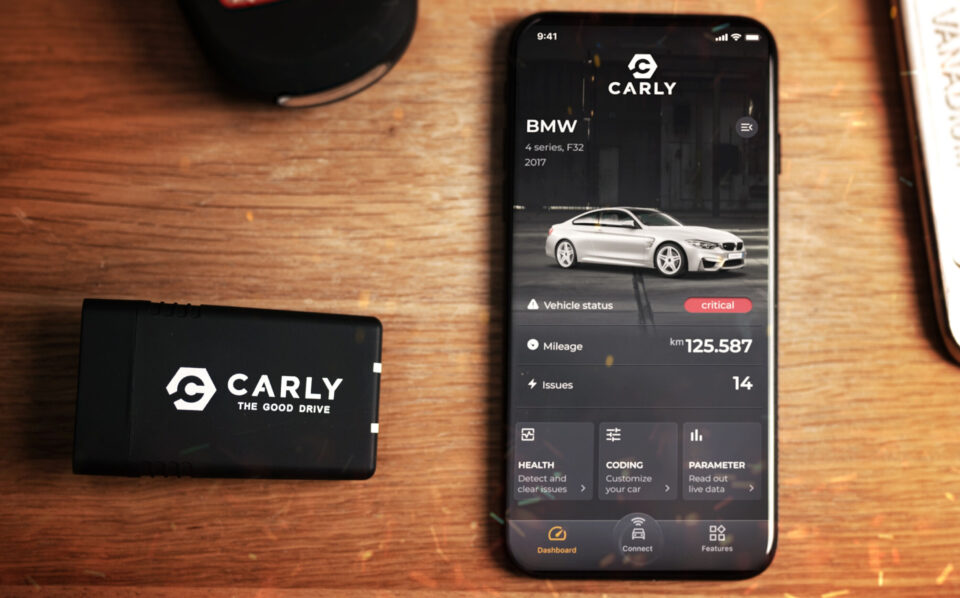
A new report suggests UK drivers are facing winter repair bills of up to £1,200 for common faults but it raises a bigger question for independent garages: are DIY diagnostic apps creating more problems than they solve?
The data comes from consumer diagnostics firm Carly, which claims its £40 OBD2 scanner allows drivers to “identify, understand and resolve” vehicle issues.
Everyone will have come across that customer: the one who arrives at the workshop, phone in hand, insisting they know exactly what’s wrong.
The Carly report highlights three major winter killers: glow plugs, auxiliary coolant pumps, and air quality sensors.
It quotes “eye-watering repair estimates”, suggesting a “defective control unit” for a glow plug system could cost between £848 and £1,266, while a simple set of glow plugs could set a driver back £835.
For garages, these figures present a double-edged sword. While it educates the public that modern vehicle repairs are complex and expensive, proving that a £1,000 bill isn’t a “rip-off” but the reality of fixing complex diesel emission systems, it also reinforces the myth that a fault code equals a diagnosis.
The press release states the app helps drivers “resolve car issues.” But as any vehicle technician knows, identifying a fault code is the easy part. Knowing whether it’s the relay, a chafed wire, or a seized plug that’s about to snap in the cylinder head is where the professional earns their money.
The fear for the trade is that tools marketing themselves as “professional-grade insights” encourage customers to fire the “parts cannon” before visiting a garage.
If a customer scans their car, sees a “coolant pump” code, and buys a cheap aftermarket part off eBay, they often arrive at your door expecting you to just “fit the part.” When it turns out the fault was actually a corroded connector or a blown fuse (which Carly lists as a £56 fix), the garage is left having the awkward conversation.
The numbers: what Carly found
| Top winter car issues | Reasons triggering car issues and approximate repair cost | Probability of fault code |
| Glow plug failure | Control unit defective = £848 – £1266Glow plug defective = £618 – £835Cable/plug defective = £116 – £160Fuse /power supply defective = £56 – £76 | 60% |
| Auxiliary coolant pump failure | Pump defective = £570 – £820Cable/plug defective = £116 – £160Fuse defective = £56 – £76 | 65% |
| Air quality sensor failure | Sensor defective = £281 – £395Cable/plug defective = £116 – £160Fuse defective = £56 – £76 | 78% |
The debate: education or Interference?
Dali Ati from Carly says: “With better visibility of vehicle health, drivers can prepare more effectively and avoid being caught out.”
There is truth in this. A customer who knows their car is sick is less likely to drive it until it blows up, potentially saving the garage a headache. However, the line between “monitoring” and “diagnosing” is blurring.
Are you seeing more customers arriving armed with OBD app data? Does it make your life easier because they accept the fault, or harder because they argue with your professional diagnosis? And what about those repair cost estimates, do they match what you are charging in the real world?