

The government has officially confirmed a massive shake-up of the MOT system, and it is set to deliver a highly lucrative new revenue stream straight to the doors of independent Class 7 testing stations.
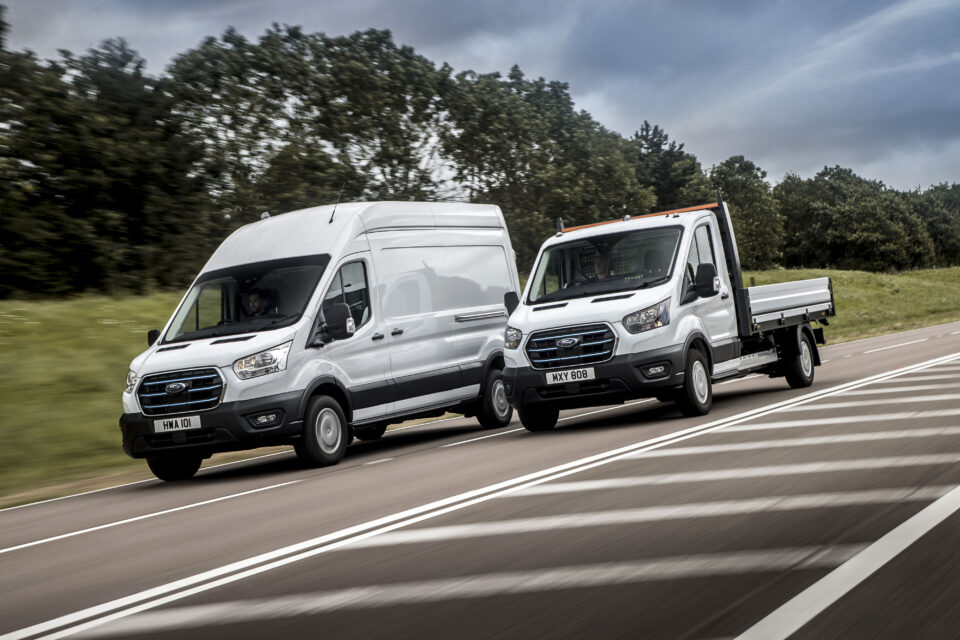
Following years of intense lobbying by fleet operators, the Department for Transport (DfT) and the DVSA have announced that from June 1, 2026, zero-emission goods vehicles weighing between 3,501kg and 4,250kg will be permanently stripped of their HGV classification.
Instead of being forced into authorised testing facilities (ATFs) after just one year on the road, these heavier electric vans will now be classed as standard Class 7 vehicles. It means they will not require their first MOT until they are three years old, followed by annual testing thereafter.
For the independent aftermarket, this means fleet managers, desperate to avoid the cost, downtime, and bureaucracy of the ATF network, will soon be looking for local garages equipped to handle their heavier zero-emission fleets.
Why the rules are changing
Until now, many electric vans have been heavily penalized simply for the weight of their battery packs.
A zero-emission van that is identical in physical size, payload, and purpose to a 3.5-tonne diesel equivalent would easily tip over the 3.5t weight threshold, instantly triggering stricter HGV testing regimes, EU tachograph requirements, and complex drivers’ hours rules.
Aviation, Maritime and Decarbonisation Minister Keir Mather framed the reversal as a massive cut to “unnecessary red tape,” backed by a £1 billion government investment in commercial e-mobility.
“Businesses will now no longer face unnecessary red tape when they make the switch, cutting costs, reducing bureaucracy and driving growth up and down the country,” Keir said.
The British Vehicle Rental and Leasing Association (BVRLA) hailed the move, with Chief Executive Toby Poston noting that the previous rules were a “major operational hurdle” that slowed the transition to zero-emission transport.
While the government focuses on the “green” victory, the DVSA has issued Special Notice 01-26 outlining strict new technical realities for testers on the workshop floor.
What you need to know
If your garage operates a Class 7 bay, you must accept these vehicles from June 1, but there are several critical caveats:
– Strictly Zero Emission: This reclassification applies only to pure electric or zero-emission vehicles. Hybrids and range-extenders (utilising a petrol or diesel engine for drive or battery charging) are completely excluded and must still adhere to standard weight classifications.
– Tread Depth Increases: Because these vans are transitioning out of the HGV regime, the minimum legal tyre tread depth will jump from the 1.0mm heavy vehicle standard up to the standard Class 7 requirement of 1.6mm.
– Speed Limiters: Testers must acquaint themselves with section 7.10 of the inspection manual, as speed limiter checks are now explicitly required for these vehicles.
– The “Laden” Refusal Right: A 4.25-tonne van is a serious piece of metal. The DVSA has made it clear that if a vehicle is presented fully or partially laden, and its exact weight cannot be proven or measured safely via an ATL brake tester, testers have the absolute right to decline the test until the presenter unloads it.
Fleet operators are about to pull thousands of heavy electric vans out of the expensive ATF network and drop them into the Class 7 system.
If your independent garage has the ramp capacity (safe working loads above 4,250kg) and the EV-trained technicians to handle them, June 1 represents a massive commercial opportunity to lock down lucrative local fleet contracts.
Is your Class 7 bay ready for the 4.25-tonne electric van influx? Drop your thoughts in the comments.