

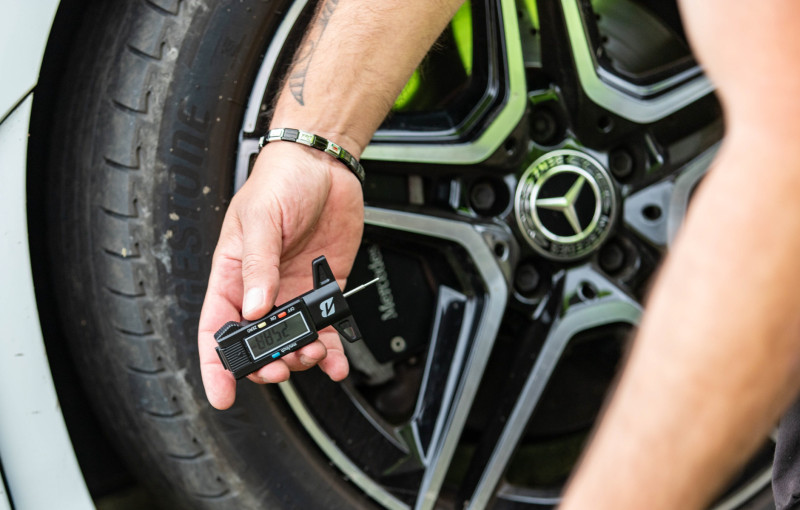
A sharp 19 per cent year-on-year surge in road casualties involving illegal, defective, or underinflated tyres has exposed a growing maintenance deficit across Britain’s vehicle parc.
According to the Department for Transport’s Reported Road Casualties Great Britain data, deaths and serious injuries linked directly to defective tyres climbed to 201, while total casualties across all severities rose 14 per cent to reach 667.
Against this backdrop, consumer research commissioned by Bridgestone reveals overwhelming public backing for tighter maintenance rules, including 81 per cent of motorists demanding mandatory tyre checks for newly qualified drivers and over three-quarters calling for employers to take legal responsibility for employee vehicles used for work journeys.
For workshop owners, service advisors, and technicians, these figures represent far more than a public safety talking point; they reflect a persistent disconnect on the ground, where tyres continue to be treated by motorists as a grudge purchase right up until MOT day.
Despite tyres remaining the single physical contact point between vehicle and asphalt, tyre defects consistently account for more than six per cent of all initial Class 4 MOT failures, with over a million classified as dangerous defects each year.
The widespread public assumption that a passing MOT slip guarantees year-round mechanical roadworthiness leaves a substantial blind spot that workshops must actively challenge at the service desk.
The survey’s revelation that 76 per cent of motorists want employers to enforce strict tyre checks on vehicles used for work-related journeys spotlights a lucrative commercial opportunity for independent workshops.
So-called grey fleet vehicles, where staff use private cars for business mileage, routinely operate outside corporate maintenance regimes, leaving businesses exposed to severe health-and-safety liabilities.
Proactive garage owners can turn this duty-of-care gap into regular workshop revenue by pitching structured tyre health inspections, digital tread depth reporting, and scheduled maintenance contracts directly to local firms whose employees depend on their own cars for work.
The research also highlights a widespread public demand for better driver education around Tyre Pressure Monitoring Systems, an area where workshop technicians routinely see customer complacency causing mechanical trouble.
Rather than acting as an early warning for air loss, dashboard TPMS warning lamps are too often ignored by drivers until an MOT failure notice is issued, or worse, masked using cheap handheld diagnostic tools.
This breakdown in driver awareness creates an immediate upskilling opportunity for workshops, ensuring apprentices and technicians are trained to identify valve stem corrosion, conduct proper sensor battery diagnostics, and replace faulty programmable sensors rather than treating tyre bays as pure rubber-swapping operations.
With the DfT figures proving that preventable tyre failures are actively moving in the wrong direction, workshops have an authoritative foundation to reshape how they sell tyre safety and wheel alignment to vehicle owners.
Integrating digital optical tyre scans and clear visual reporting into routine servicing routines strips away customer scepticism, turning an otherwise begrudged tyre replacement into an undeniable safety necessity.
By bridging the gap between what motorists admit needs to happen and what actually rolls into testing bays, garages can simultaneously safeguard road users and secure sustainable tyre and alignment margins.