

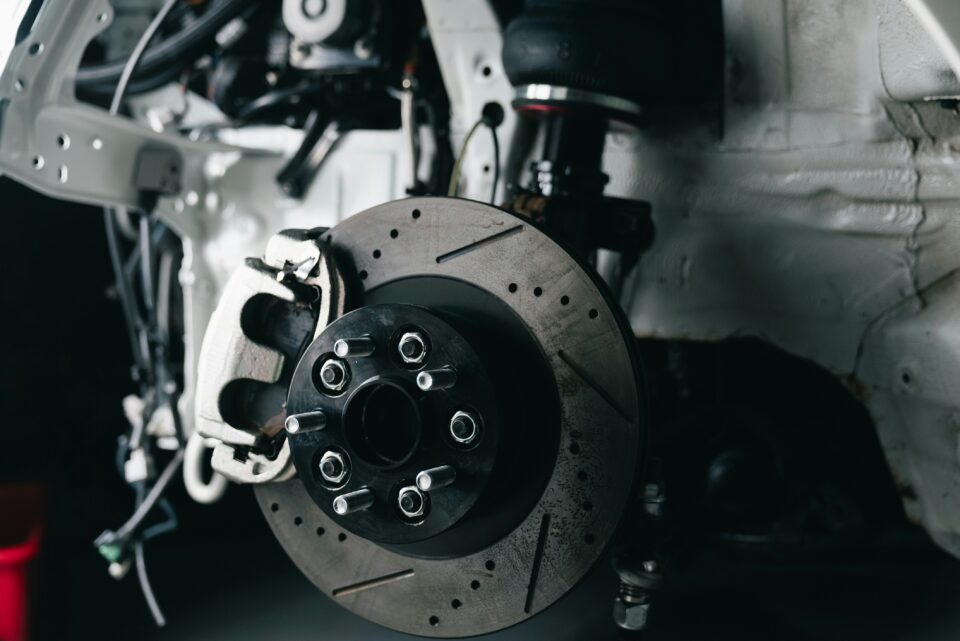

Every garage has faced it: a customer walks in carrying a brake set or suspension arm bought online, asking you to quote solely for the labour.
While drivers often view bringing their own components as an easy way to trim repair bills, agreeing to fit customer-supplied parts exposes workshops to severe safety risks, unrecoverable diagnostic labour, and unavoidable legal liability.
To tackle the issue, the Independent Garage Association (IGA) has teamed up with the Intellectual Property Office (IPO) to launch a new awareness campaign and video titled Unsafe Car Parts: What Garages Want Drivers to Know.
The campaign highlights the hidden consequences of fitting unverified, third-party parts and reinforces why turning down these jobs remains the safest commercial choice.
Liability waiver myth
The biggest misconception is that a signed disclaimer or invoice disclaimer protects the business.
Under UK law, agreeing to install a part—regardless of who purchased it—leaves the garage liable for ensuring the vehicle is roadworthy and safe when it drives out of the bay.
Even if a customer signs a written waiver acknowledging they supplied the component, it will not protect the garage if that part subsequently fails and causes an accident or mechanical catastrophe.
When a workshop sources components through established motor factors and OE suppliers, that procurement comes with traceability, warranty backing, and verifiable build quality.
Dangers of customer supplied parts
– Zero traceability: Components purchased from unverified online marketplaces frequently lack proper quality assurance and may even be counterfeit copies of premium brands.
– Incorrect fitment: Customers frequently order parts based on generic registration lookups rather than exact chassis numbers, engine codes, or PR numbers, resulting in wasted ramp time when components fail to fit.
– No labour warranty recovery: If a customer-supplied alternator or clutch fails prematurely, the supplier will not reimburse the workshop’s labour costs to strip and replace it.
– Margin erosion: Relying solely on labour rates without parts margin directly damages workshop profitability.
Explaining the realities of safety, liability, and quality control at the service desk helps customers understand that refusing unverified parts is not about inflating prices—it is about protecting the vehicle, the motorist, and the workshop team.
Does your garage operate a strict zero-tolerance policy on customer-supplied parts, or do you handle requests on a case-by-case basis? Share your views in the comments below or join the debate on the Garage Matters app.

3 comments
We never fit parts supplied by customers but we are getting asked the question more and more frequently and unbelievably people actually seem surprised when you tell them we don’t fit anything supplied, they sometimes even seem offended, usually when I say to them would you buy a steak from a supermarket and ask a restaurant to cook it for you they get the message 🙂
We never fit customer supplied parts as quite rightly what you say above could cause the business major issues.
We dont as well but are then called crooks by some. Most have bought parts at EURO at same price as we would pay and sometimes less cos euro dont do garages any favours at all,same as what partco used to be