
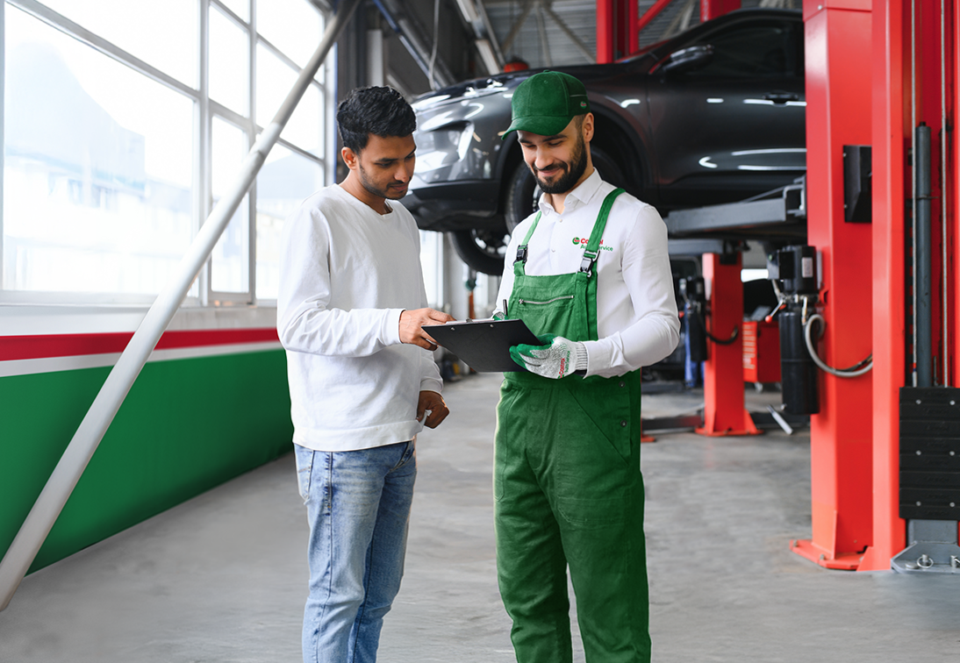
Independent workshops have a major education and marketing job ahead to win over motorists making the switch to electric, after new research commissioned by Castrol revealed that more than half of petrol and diesel drivers would default to a franchised dealership for routine EV servicing.
According to the survey, 51% of internal combustion engine (ICE) car owners said they would be more likely to trust a main dealer than an independent garage for routine EV maintenance, while just 6% disagreed.
At the same time, widespread misconceptions persist over how much an electric car actually costs to look after.
Just 14% of UK petrol and diesel owners believe switching to an equivalent EV would reduce their servicing bills, despite electric drivetrains requiring no engine oil changes, spark plugs, timing belts, exhaust components, or conventional clutch replacements, and placing far lighter wear on brake pads and discs thanks to regenerative braking.
Instead, half (50%) of respondents expect an EV to cost more in parts and labour to maintain than an ICE equivalent, while 37% remain unsure.
That perception gap is sharpest among younger motorists: 75% of drivers aged 18 to 24 believe EV servicing is more expensive, compared with 37% of those aged 65 and over.
The findings highlight a clear commercial risk, and an immediate opportunity, as more battery-electric vehicles age out of their initial manufacturer warranty periods and enter the wider aftermarket.
Layla Yebaile, Head of Customer & Channel at Castrol, said: “Widespread misunderstanding about how much it costs to service an EV could be one of the factors discouraging petrol and diesel car owners from making the switch to electrified mobility.
“The industry can do more to explain the aftersales experience for potential EV buyers, outlining the likely cost benefits, while also making the case for essential work to be carried out such as checks on diagnostics, battery health, and consumables.
“This new data also suggests independent workshops in particular can benefit from explaining their credentials in servicing and maintaining EVs, vital for sustaining their future income as the mix of cars on the roads evolves with the shift to electrification.”
Dedicated fluids for wet e-motor drivetrains
Alongside customer communication, workshops gearing up for regular EV work must ensure they are stocking the right application-specific fluids rather than treating electric drivetrains as “sealed for life.”
Castrol’s Castrol ON range brings together dedicated EV transmission fluids, greases, and thermal management solutions engineered specifically for electrified powertrains.
Earlier this year, the lubricant specialist expanded the line-up with Castrol ON EV Transmission Fluid W3, a full-synthetic fluid developed for electric vehicles running wet e-motors, including models from Tesla, Leapmotor, MG, Polestar, and Volvo, where the electric motor operates immersed directly in the fluid.
Formulated with low electrical conductivity and high breakdown voltage to protect copper windings and internal electronics, the fluid reduces friction and operating temperatures while improving thermal and oxidative stability to extend drivetrain service life.
More details on the full Castrol ON product line-up and vehicle application guidance are available online.