

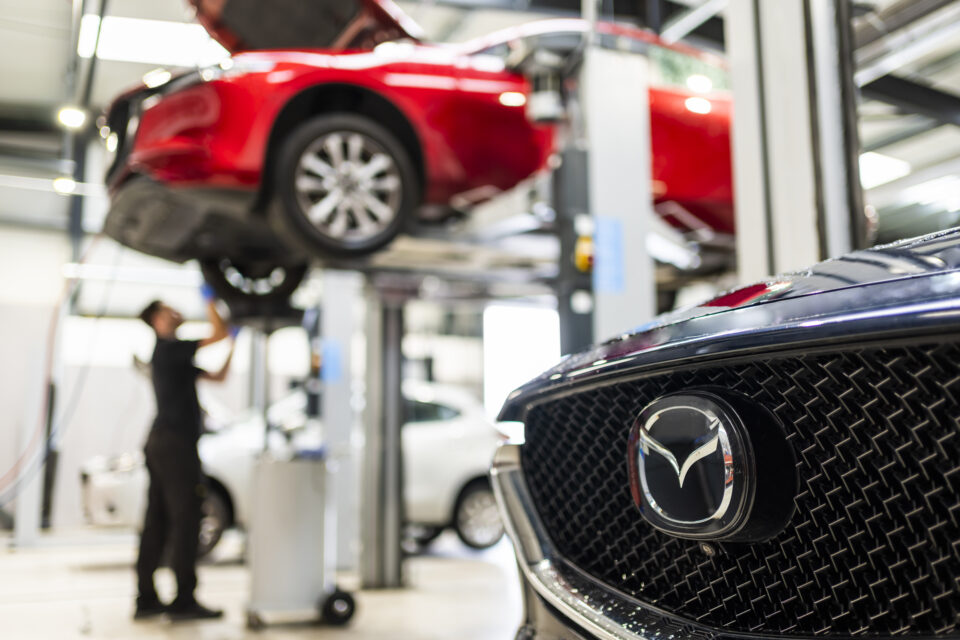
In a direct bid to retain cars that traditionally migrate away from the franchised dealer network, Mazda UK has expanded its service plan offering to target vehicles over a decade old.
Franchised networks have long struggled to keep hold of cars once factory warranties expire.
But as vehicle sales models evolve and OEMs seek steady aftersales revenue, manufacturers are increasingly turning their attention to older vehicles.
Mazda UK has launched an expanded service plan programme, administered in partnership with automotive software specialist eDynamix, specifically tailored for out-of-warranty models.
The scheme is not restricted to cars sold through franchised showrooms.
Existing owners can purchase the package directly through Mazda’s consumer website, enabling the manufacturer to pitch franchised servicing directly to motorists who bought their cars privately or through independent used car dealers.
According to the manufacturer, the strategy is already yielding results. Around 10% of new service plan sign-ups since launch have been for vehicles over ten years old, including 13-year-old CX-5 crossovers and Mk3 MX-5 sports cars.
To make the proposition commercially viable for owners of older vehicles, Mazda confirmed it has introduced reduced labour rates across its dealer network to narrow the pricing gap with non-franchised workshops.
David Wilson-Green, Director of Customer Service and Aftersales at Mazda Motors UK, openly acknowledged the market the brand is targeting: “Affordability is key to the success of this programme, which is why we have ensured that owners of older cars are included and benefit from competitive labour rates.
“Typically, these customers will be using independent garages and fast-fit centres, so we see this as a valuable way for Mazda dealers to build long-term, lasting relationships for both servicing work and future car sales.”
The scheme also introduces an optional monthly contribution feature, allowing motorists to build up an emergency repair fund to cover unexpected wear-and-tear items like brakes, suspension components, or tyres that fall outside standard service schedules.
Any unused funds can be reclaimed at the end of the term.
Why it Matters
While independent workshops continue to win on local trust, convenience, and direct technician-to-customer communication, Mazda’s move highlights an aggressive trend across VM aftersales strategies:
– Subscription psychology: Monthly direct debits create sticky customer relationships. Once a driver is committed to an automated monthly payment, they rarely shop around for alternative workshop quotes when service lights appear.
– Protecting the secondary repair pot: By encouraging motorists to build dedicated funds for wear-and-tear repairs, franchised networks are attempting to ring-fence profitable remedial work before an independent garage even sees the car on a ramp.
– The counter-strategy for independents: To protect market share, workshops must evaluate their own retention tools. Independent service plan providers, transparent digital vehicle health checks (EVHCs), and spread-the-cost payment solutions (such as interest-free finance options) are no longer optional extras, they are vital tools to prevent main dealers from reclaiming older car work.
As more manufacturers look to squeeze extra lifecycle revenue out of the UK car parc, independent garages can expect dealer networks to fight harder than ever for cars entering their second and third decades on the road.
Are you seeing franchised dealers in your local area cutting labour rates to target older cars, or do vehicle owners still prefer dealing directly with an independent workshop? Have your say in the comments below.