

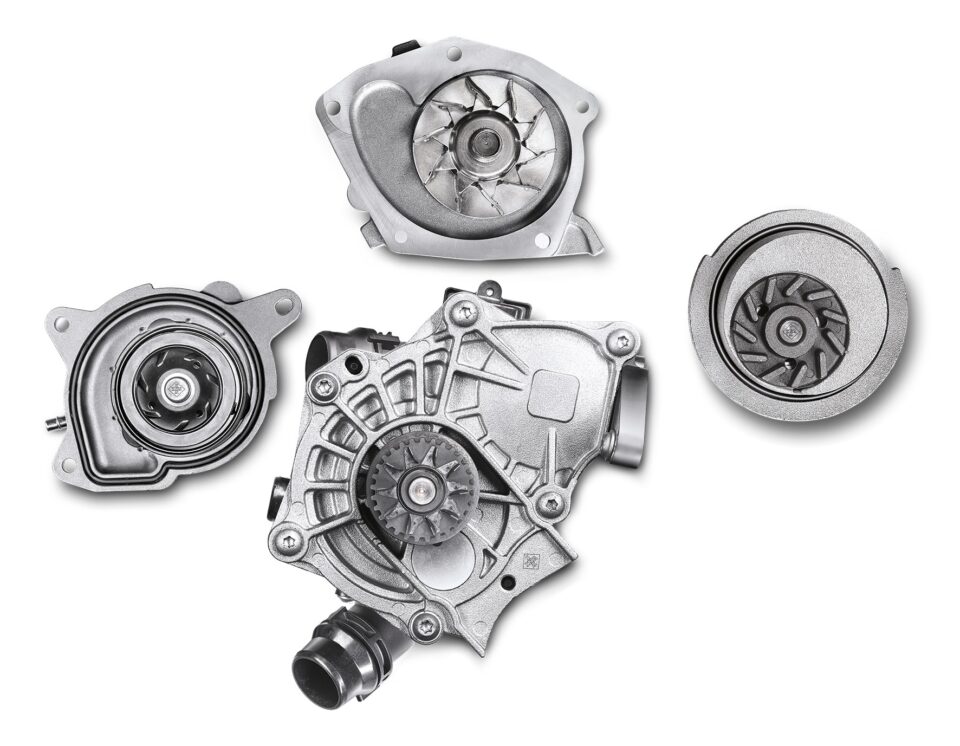
Premature coolant pump failure remains a frustrating source of warranty claims and unpaid ramp time for workshops across the UK.
To help technicians avoid comebacks and protect workshop profitability, OE manufacturer Schaeffler has identified the most frequent installation errors seen by its technical team, alongside essential best-practice advice.
According to Schaeffler’s technical specialists, the majority of premature water pump failures stem from simple oversights during preparation and installation—most notably incorrect sealant usage and dry running.
The sealant trap
One of the leading culprits behind early pump demise is the misuse of liquid sealant. Schaeffler stresses that technicians should never apply sealant unless explicitly instructed in the vehicle manufacturer’s guidelines.
When sealant is permitted, strict adherence to OE instructions regarding precise location and bead volume is essential.
Before offering up the new pump, clean the engine’s mating face thoroughly with an abrasive sanding fleece. This prevents old residue, dirt, and debris from entering the coolant circuit.
Over-applying sealant causes excess material to squeeze out into the cooling system. From there, loose sealant migrates directly to the pump shaft, degrading the mechanical seal packs and triggering fluid leaks.
Never run dry: pre-lubrication & vacuum filling
Another common oversight that causes immediate and severe component damage is improper system filling.
A replacement coolant pump must never be run dry. Running the system without liquid, or attempting to fill it with plain water before adding antifreeze, rapidly damages both the delicate seal packs and the pump internals.
To guarantee a clean first start, Schaeffler recommends two critical steps:
- Pre-lubricate the pump: Submerge the replacement pump in fresh coolant prior to fitment. This coats and lubricates critical moving parts, ensuring the unit is protected the moment the engine fires up.
- Vacuum fill the cooling circuit: Schaeffler strongly advises workshops to use a dedicated vacuum filling kit. Modern cooling systems are prone to air locks; vacuum filling eliminates trapped air pockets, ensuring a complete, bubble-free fill on the first pass.
Technicians and garage owners looking to access vehicle-specific fitting instructions, torque specs, and repair guides can find further details via the REPXPERT app or online at www.repxpert.co.uk.